Archives
- 2026-08
- 2026-07
- 2026-06
- 2026-05
- 2026-04
- 2026-03
- 2026-02
- 2026-01
- 2025-12
- 2025-11
- 2025-10
- 2025-09
- 2025-03
- 2025-02
- 2025-01
- 2024-12
- 2024-11
- 2024-10
- 2024-09
- 2024-08
- 2024-07
- 2024-06
- 2024-05
- 2024-04
- 2024-03
- 2024-02
- 2024-01
- 2023-12
- 2023-11
- 2023-10
- 2023-09
- 2023-08
- 2023-07
- 2023-06
- 2023-05
- 2023-04
- 2023-03
- 2023-02
- 2023-01
- 2022-12
- 2022-11
- 2022-10
- 2022-09
- 2022-08
- 2022-07
- 2022-06
- 2022-05
- 2022-04
- 2022-03
- 2022-02
- 2022-01
-
As also found by Stolarski et al inclusion
2023-08-16
As also found by Stolarski et al. [14], inclusion of N2O in the model is successful in reducing the effect of dynamics [13] in the lower stratosphere in the Northern Hemisphere (30–60°N in our case). The inclusion of N2O also decreased the error bars on the trend values, but the trend values still c
-
br Conflict of interest statement br Benign prostatic hyperp
2023-08-16
Conflict of interest statement Benign prostatic hyperplasia (BPH) is a highly complex process characterized by an increased number of epithelial and stromal cytochalasin d in the transition zone. , , Autopsy studies by McNeal detail the evolution of histological changes within these 2 cellula
-
br Innate immune mechanisms that confront viral
2023-08-16
Innate immune mechanisms that confront viral infection Autophagy induction by virus sensing Antiviral xenophagy and virophagy The presence of viral particles within autophagosomal structures has been visualized in only rare instances. This is the case for HSV-1 when it is devoided of ICP34.
-
Polyphenols like flavonoids have the potential to penetrate
2023-08-16
Polyphenols like flavonoids have the potential to penetrate into lipid bilayers which is vital for enabling protection against oxidation. Rosmarinic 78 7 is a natural polyphenol antioxidant isolated from Sphaeranthus amaranthoides. Polyphenols can inhibit the propagation of lipid oxidation by two me
-
The LOX hydroxide metabolites are converted to secondary lip
2023-08-16
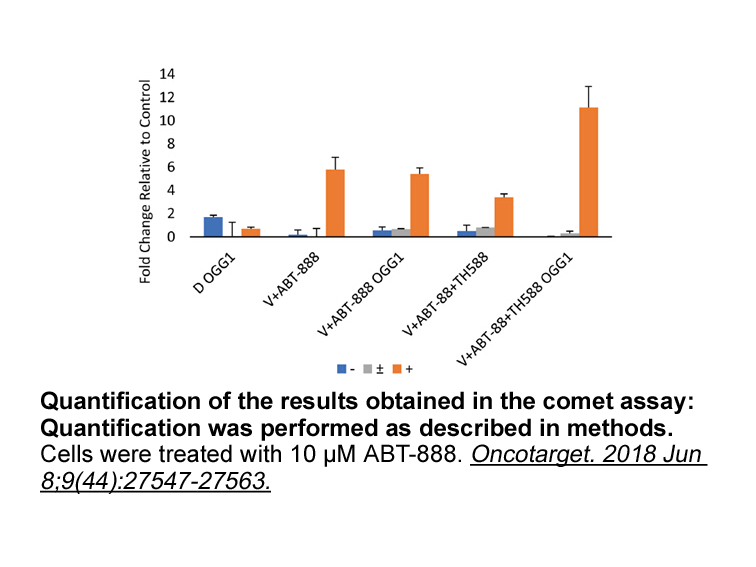
The 15-LOX hydroxide metabolites are converted to secondary lipid mediators such as lipoxin A4 from 15-HETE and protectin D1/resolvin D1 from 17-HDoHE [45] (Fig. S3). Importantly, all of these secondary lipid mediators have anti-inflammatory and pro-resolving properties [46], [47], [48]. Lipoxin A4
-
Our research is the first to report that administration
2023-08-15
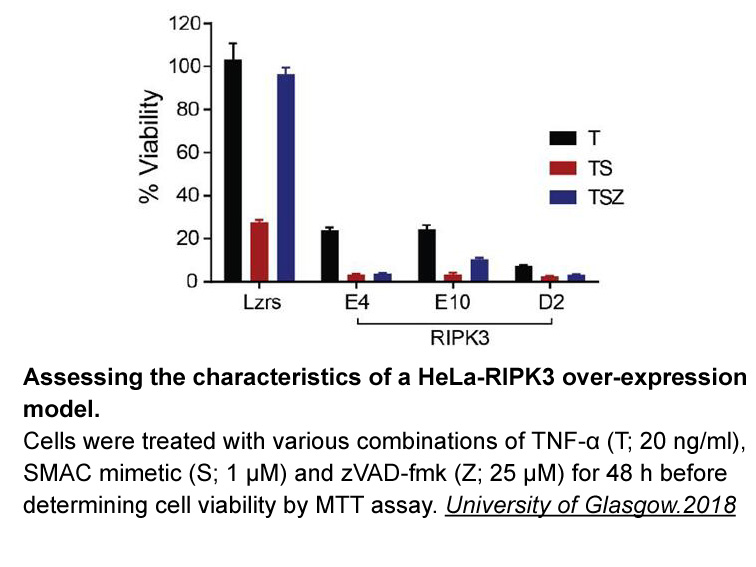
Our research is the first to report that administration of HMW-HA is an effective strategy to defend against PM2.5-induced disruption of pulmonary epithelial barrier and lung injury, and addresses that HMW-HA restricts PM2.5-induced epithelial apoptosis through reducing oxidative stress and followin
-
Aminoglutethimide first generation aromatase inhibitor
2023-08-15
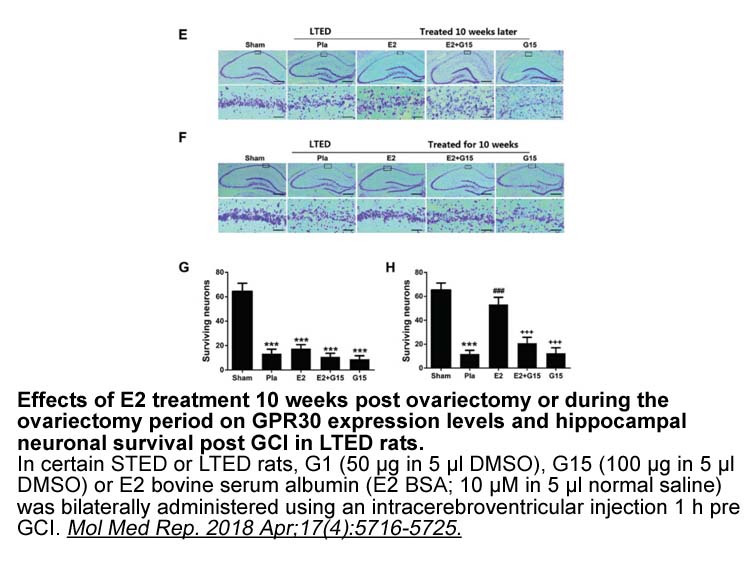
Aminoglutethimide, first generation aromatase inhibitor, has been tried as an antiepileptic drug in combination with other standard drugs (Aguilar et al., 1961). Letrozole is a third generation reversible non-steroidal aromatase inhibitor, approved by US-FDA, for the treatment of postmenopausal wome
-
In addition to calpain I activity cathepsin
2023-08-15
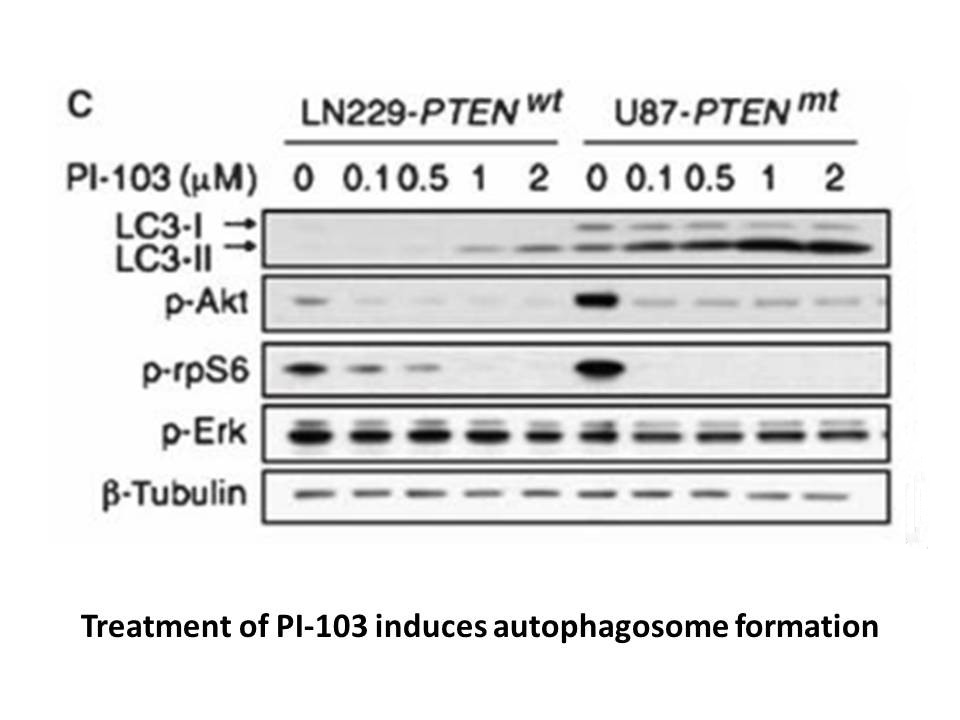
In addition to calpain I activity, cathepsin activities have been proven to be linked to apoptotic signaling. Cathepsin B and cathepsin D are two of the most abundant and well-investigated lysosome acid-dependent proteases that are involved in the apoptotic regulation (Ferri & Kroemer, 2001). Cathep
-
It has been proven that
2023-08-15
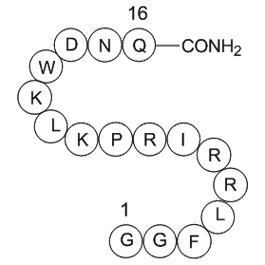
It has been proven that genetic polymorphisms can play an important role in development of hypertension and CVDs. In a Turkish population-based study, it was found that the APLNR gene (rs948847-A445C) polymorphism was not associated with coronary artery disease (CAD), but it was shown to be related
-
L-Glutamine sale br Apelin Discovered in apelin was initiall
2023-08-15
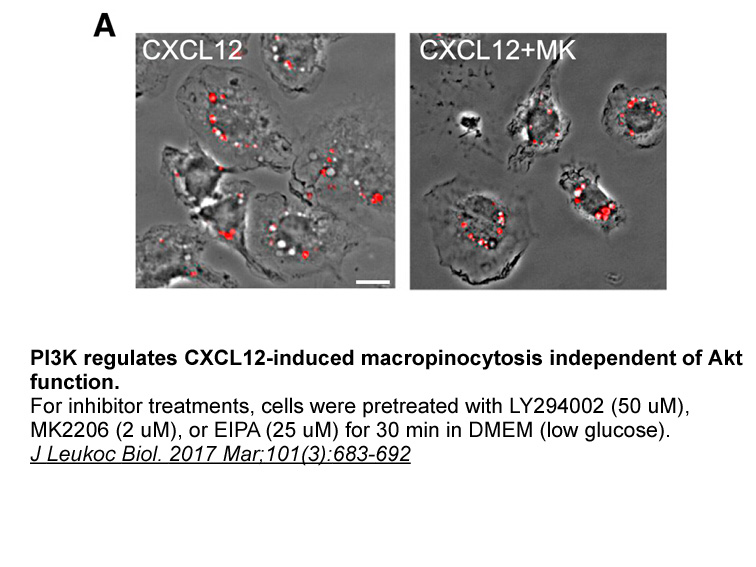
Apelin Discovered in 1998, apelin was initially identified as the sole endogenous ligand for the APJ receptor (Tatemoto et al., 1998). Apelin-77 (pre-pro-apelin) is the precursor for various pharmacologically active apelin isoforms (e.g. apelin-12, -13, -17 and 36), and it shares 75–95% sequence
-
The transcription factor activator protein AP is a
2023-08-15
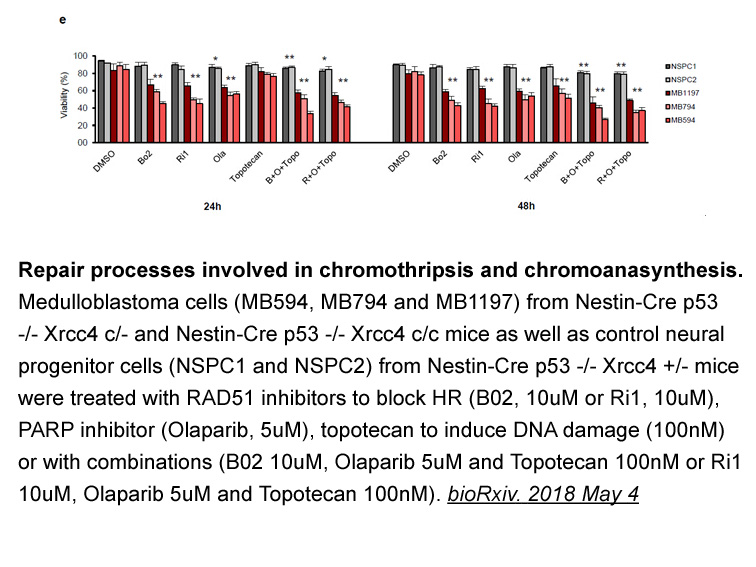
The transcription factor activator protein-1 (AP-1) is a redox-sensitive transcription factor whose activity is controlled by agents that perturb intracellular thiol concentrations [10,11]. AP-1 is mainly composed of Jun, Fos, and ATF protein dimers [12,13]. AP-1 mediates the regulation of numerous
-
br Mechanism of action In general the
2023-08-15
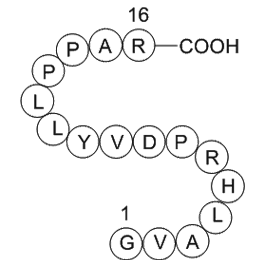
Mechanism of action In general, the main targets for antifungal drug development are cell wall polymer (glucans, chitin, mannoproteins), cell membrane (especially ergosterol) biosynthesis, DNA and protein synthesis (topoisomerases, nucleases, elongation factors and myristoylation), and signal tra
-
Tetracyclines constitute one of the most important antibioti
2023-08-15
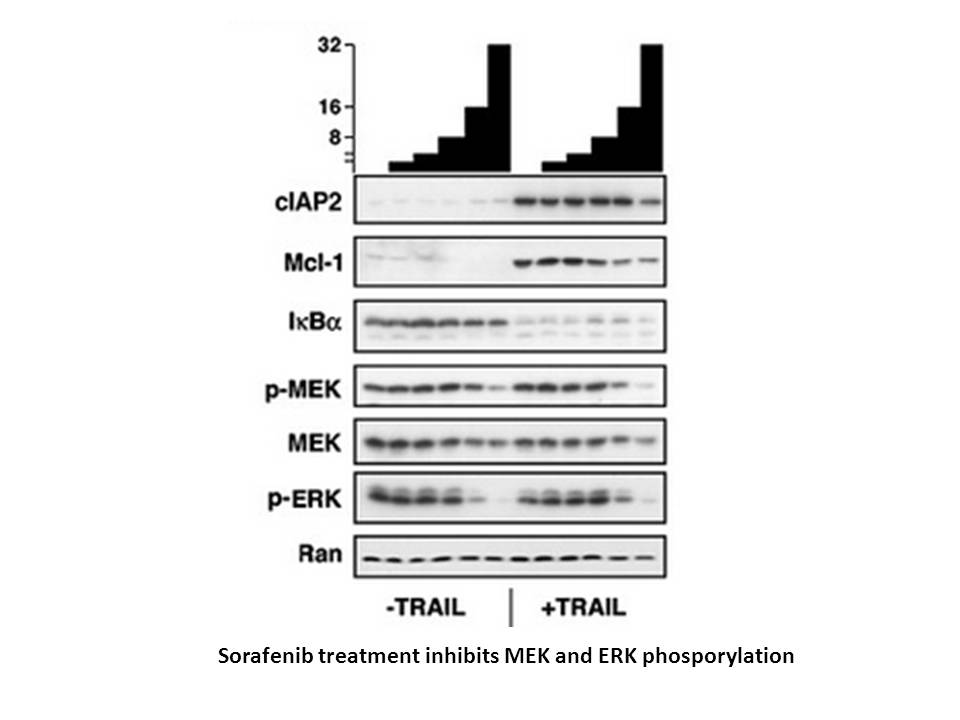
Tetracyclines constitute one of the most important antibiotic groups used as veterinary and human medicine and as feed additives in the agricultural sector (Li et al., 2011a, Simon, 2005). Annual worldwide production of tetracyclines is estimated to be in the thousands of tons (Michalova et al., 200
-
In addition unconventional mechanisms of internalization
2023-08-15
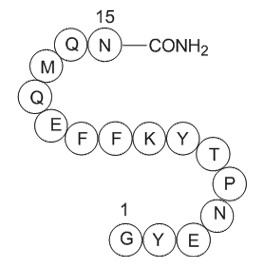
In addition, unconventional mechanisms of internalization cannot be ignored. It is generally believed that the conventional homologous internalization of a GPCR depends on the activation of G proteins, since GRK activation requires the pre-activation of G proteins (Fig. 2). Feng et al. demonstrated
-
br Obstructing SNARE zippering Sharma et al demonstrated for
2023-08-15
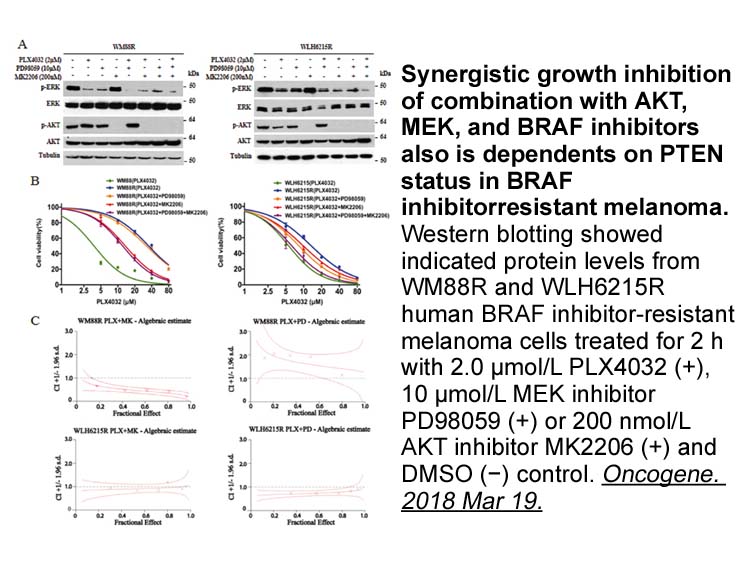
Obstructing SNARE “zippering” Sharma et al. demonstrated for the first time that in the postmortem AD brains, the level of SNARE complex formation, which is necessary for driving synaptic vesicle fusion at the presynaptic active zone, is significantly reduced [123]. In the absence of changes in e
8472 records 329/565 page Previous Next First page 上5页 326327328329330 下5页 Last page