Archives
- 2026-11
- 2026-10
- 2026-09
- 2026-08
- 2026-07
- 2026-06
- 2026-05
- 2026-04
- 2026-03
- 2026-02
- 2026-01
- 2025-12
- 2025-11
- 2025-10
- 2025-09
- 2025-03
- 2025-02
- 2025-01
- 2024-12
- 2024-11
- 2024-10
- 2024-09
- 2024-08
- 2024-07
- 2024-06
- 2024-05
- 2024-04
- 2024-03
- 2024-02
- 2024-01
- 2023-12
- 2023-11
- 2023-10
- 2023-09
- 2023-08
- 2023-07
- 2023-06
- 2023-05
- 2023-04
- 2023-03
- 2023-02
- 2023-01
- 2022-12
- 2022-11
- 2022-10
- 2022-09
- 2022-08
- 2022-07
- 2022-06
- 2022-05
- 2022-04
- 2022-03
- 2022-02
- 2022-01
Benzene metabolism occurs primarily in the liver where benze
2022-05-27
Benzene metabolism occurs primarily in the liver where benzene is converted into phenol, catechol, hydroquinone (HQ). HQ is further converted to 1,4-benzoquinone (1,4-BQ) in the bone marrow which is the primary organ of benzene toxicity (Bolton et al., 2000). 1,4-BQ is an important benzene metabolit
Our previous study provided some evidence that
2022-05-27
Our previous study provided some evidence that the pre-treatment of livers with rapamycin induces the expression of HO-1 and Prx-1 (Kist et al., 2012). The present results define the dose-response curve for the induction of HO-1 and Prx-1 expression by rapamycin in normal hepatocytes. While, in the
Lestaurtinib br The hedgehog signalling pathway The canonica
2022-05-27
The hedgehog signalling pathway The canonical Hh pathway is a conserved, highly complex signalling cascade, with many players and intricate regulation. However, it can be simplified into four fundamental components: i) the ligand Hh, ii) the receptor Patched (Patch [PTCH1]), iii) the signal trans
The eel and perhaps other euryhaline teleost
2022-05-27
The eel, and perhaps other euryhaline teleost fish, have the additional peptide, renoguanylin that exhibits high levels of expression within the kidney as well as the intestine. In terms of overall sequence, pre-prorenoguanylin is more homologous to pre-proguanylin than pre-prouroguanylin and a phen
In this review we aim to provide a
2022-05-26
In this review, we aim to provide a comprehensive understanding of: 1) how AT-resident CD4+ T cell subpopulations regulate the metabolic status of AT; and 2) how adipocytes as antigen presenting cells to modulate the activities of CD4+ T cell subpopulations in AT. Under condition with obesity, ad
br Conflict of interest statement br Acknowledgements We
2022-05-26
Conflict of interest statement Acknowledgements We acknowledge the support of Zoetis Animal Health, Estrotect, Select Sires and Texas A&M AgriLife Research. The assistance of Randle Franke and Ernest Soto is also gratefully acknowledged. Background Luteal phase deficiency (LPD) is caused b
In previous work we showed
2022-05-26
In previous work we showed that benzophenanthridines do not affect the surface expression of GlyT1 (Jursky and Baliova, 2011). The results from the surface biotinylation studies reported in Fig. 3 show that the surface expression of the Y370F mutant is not significanly affected by the alkaloids in t
Glutamate aspartate transporters or excitatory amino
2022-05-26
Glutamate-aspartate transporters or excitatory amino IKK-16 hydrochloride transporters (EAATs) are essential for the maintenance of glutamate homeostasis. EAATs are widely distributed in central neurons and glial cells (Danbolt, 2001, Martinez-Lozada et al., 2011). They are driven by Na + and K+ gr
br Glucocorticoid receptor and metabolic syndrome GCs acting
2022-05-26
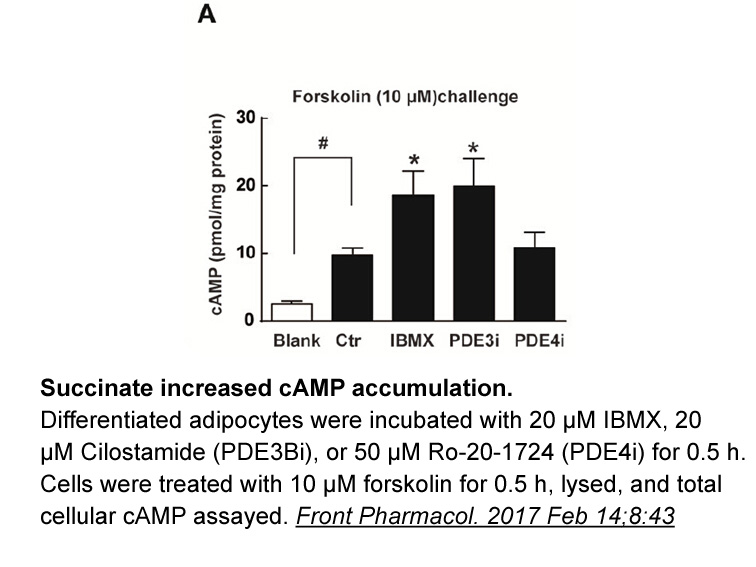
Glucocorticoid receptor and metabolic syndrome GCs acting through the GR regulate key enzymes of glucose metabolism in the liver, skeletal muscle, adipose tissue and the pancreas. In the liver, GCs regulate the expression of major gluconeogenic enzymes such as phosphoenolpyruvate carboxykinase, g
Genetic disruption or pharmacologic inhibition of the
2022-05-26
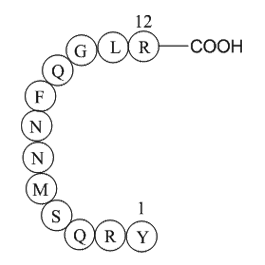
Genetic disruption or pharmacologic inhibition of the hepatic glucagon pathway has invariably been shown to increase pancreatic α cell mass. This has been observed in glucagon receptor (GCGR) knockout (Gcgr−/−) mice (Gelling et al., 2003), glucagon knockout mice (Hayashi et al., 2009), prohormone co
neurotensin receptor For the two KO models CX and
2022-05-26
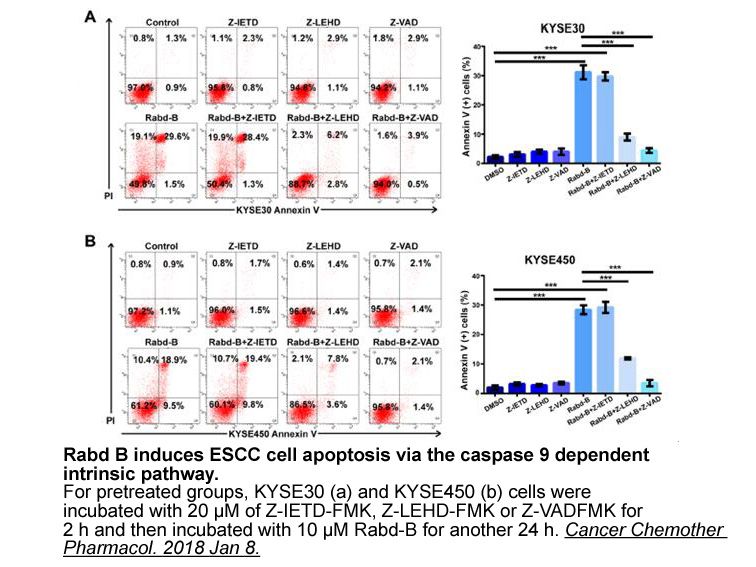
For the two KO models (CX30 and CX43), fluorescence recovery is almost always best fitted with a 2-component exponential (Fig. 6A and D). Statistical analysis of the parameters (Table 1) shows that in both cases the two time scales and the fraction of recovery associated with the fast intracellular
Piperlongumine mg Since our new compound Fex could be
2022-05-26

Since our new compound Fex-3 could be a new FXR ligand, we try to demonstrate that Fex-3 was an intestinal-restricted FXR agonist which only activated FXR in the intestine not in the liver or other organs. Initially, we investigated this in Caco-2 Piperlongumine mg with transwell experiments. From
In the intestine ethanol exposure can change
2022-05-26
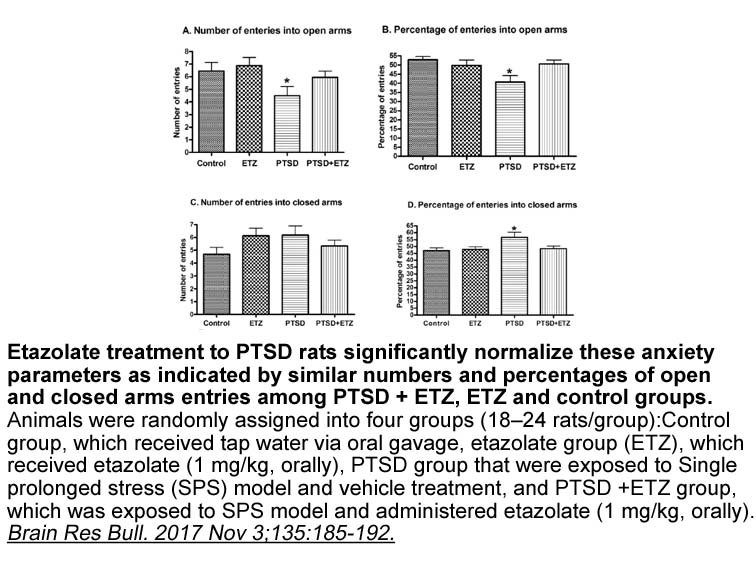
In the intestine, ethanol exposure can change the composition of gut microbiota and promotes the growth of intestinal gram-negative bacteria, which results in the accumulation of endotoxins such as, LPS. Ethanol also impacts the integrity of the gastrointestinal mucosal barrier, increasing intestina
At this point it needs
2022-05-26
At this point it needs, however, to be mentioned that most in vivo studies regarding the herein discussed nuclear receptors were performed in rodents, especially in mice. Due to the significant differences in metabolism in mice and humans, not all results are translatable between these species and h
Although drug monitoring is not usually
2022-05-26
Although drug monitoring is not usually requested, there are some cases where measurement of DOACs in Cinchonidine receptor is useful, and of special help for managing patients at risk. These cases include the control of adherence to a therapeutic protocol, surveillance of drug accumulation risk in
8616 records 494/575 page Previous Next First page 上5页 491492493494495 下5页 Last page